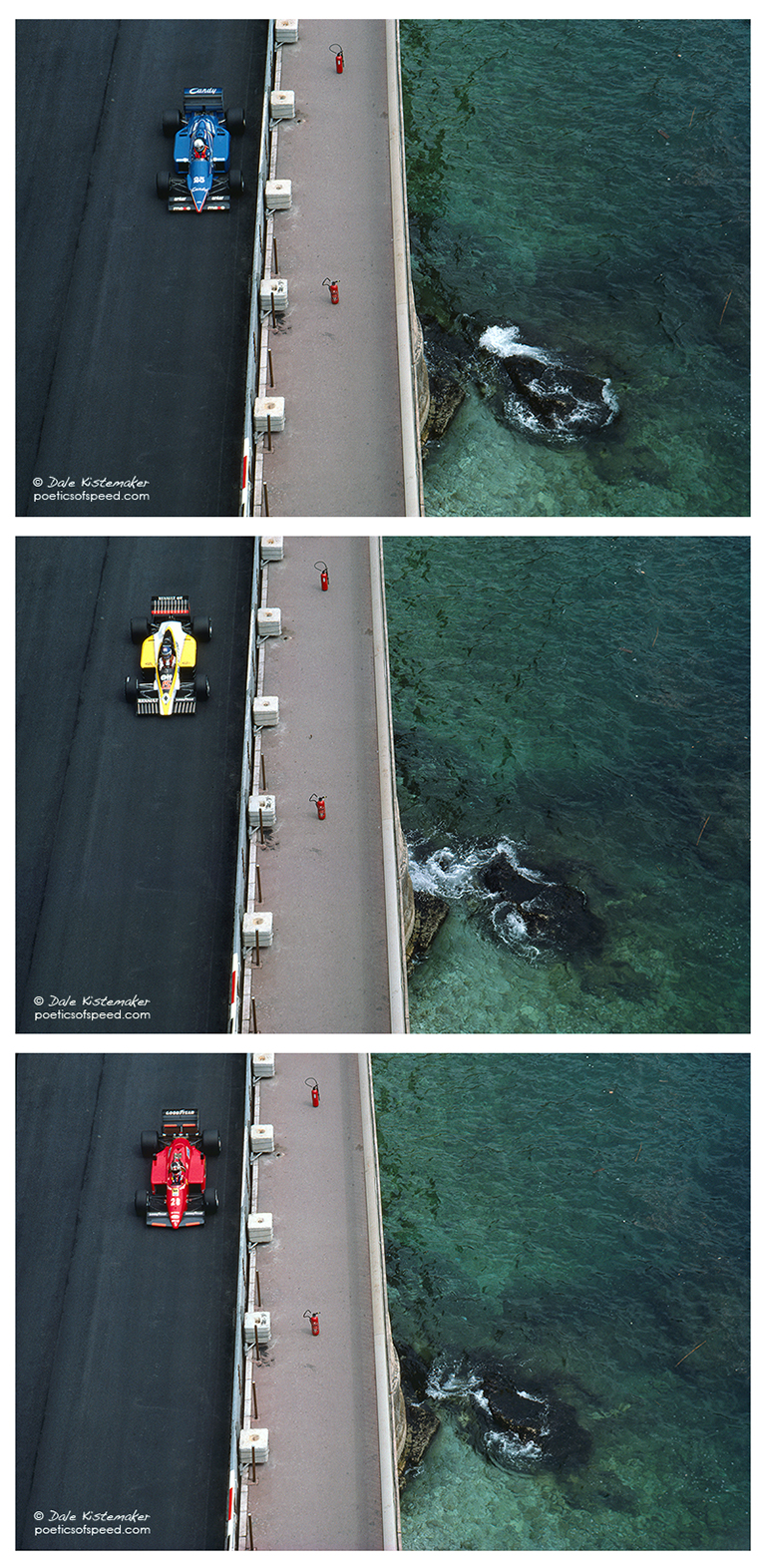
Monaco: Three Cars And The Mediterranean
After Portier a Ligier, a Renault and a Ferrari accelerate along the Harbor and into the Tunnel.
Monaco: Cars At The Casino
Clockwise from upper left: Stefan Johansson, Ferrari; Nelson Piquet, Brabham; Thierry Boutsen, Arrows and Patrick Tambay, Renault in the Casino turn. Check out the Alain Prost at the Casino, Monaco Grand Prix post on October 6, 2011 and at a slightly different position Eddie Cheever, Benetton, Monaco, October 23, for a comparison.

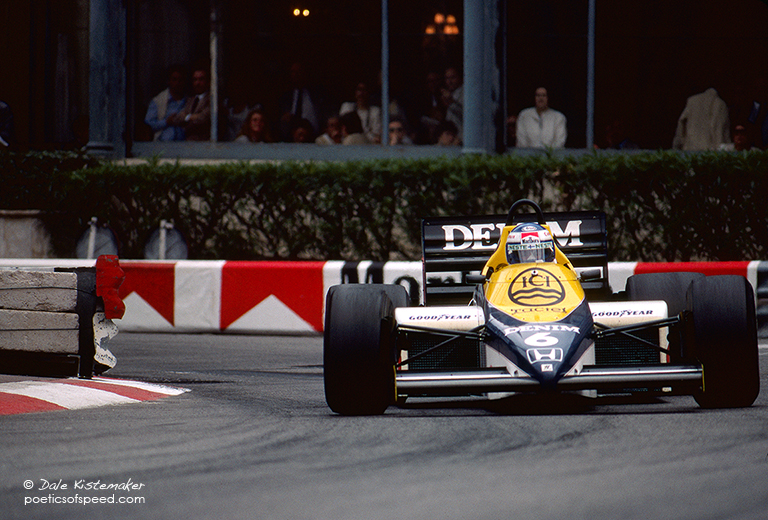
Monaco: Photographers And The McLaren
The best racetracks offer their own unique insight into the experience of Formula 1. Monaco of course has its exceptional ambiance but as a photographer Monaco features so many locations to get really close to the cars at speed. The visceral sensation of Formula 1 cars racing almost at arms distance is extraordinary. I never got used to how astonishingly fast they were and the precision of the drivers was unforgettable.

Monaco: Accident At The Tip Top
Manfred Winklehock in his ATS-BMW has hit the armco barrier near the legendary Tip Top bar. Ayrton Senna squeezes through the narrow opening in his Toleman-Hart.

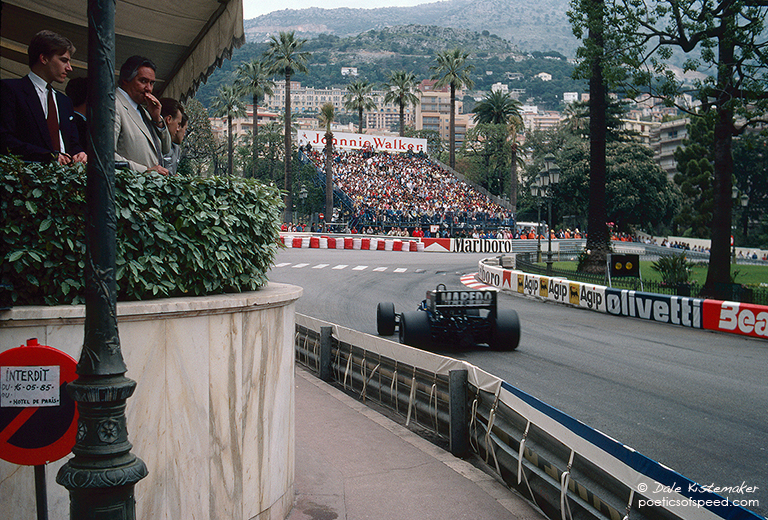
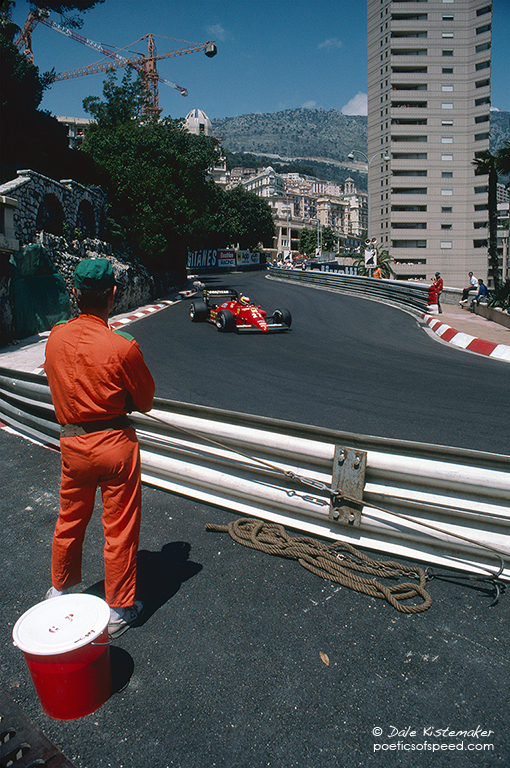
Monaco, Around The Track: The Corner Worker
Michele Alboreto in the Ferrari enters the turn.
Monaco: The Interview
Riccardo Patrese interviewed in the pits of the Monaco Grand Prix.

Monaco: Crossing the Threshold
When I entered the pits at the Monaco Grand Prix I had a reaction quite unlike any other I had experienced in motorsport. I’m always excited when I arrive at any race from local club outings to top tier professional competitions. But at Monaco my heart was beating so strongly I thought it would burst out of my chest. I could hardly breathe so I began photographing intensely because usually the act of photography centers me. But in the space of the first few minutes I made two dramatic errors that I have never made before or since. The first mistake was dropping a camera. I’m a tool person and I’ve always had a reverence for the instruments of the profession so I was stunned that I’d lost my concentration enough to see one of my Nikons hit the ground. Fortunately it was built like a tank and the landing was relatively gentle so no damage was done. It took a while to notice the second mistake. I had been shooting wildly when I thought I should have reached the end of the roll of film by now. I looked at the counter and it indicated no exposures. I realized I had not properly inserted the leader of the film into the take up reel so the film never went through the camera. Basic Photo 101. That was enough for me so I found a relatively quite place to sit for a while and just observe my surroundings until I calmed down.
Through the years I’ve thought a lot about this intense experience. Monaco is a sensory overload but I realized the Monaco Grand Prix was the spiritual ground zero, the point of origin for my love of motor racing and when I stepped into the pits I was walking into my dream. All the reading, imaginings and aspirations of my youth were suddenly and quite profoundly real. My mind couldn’t grasp it at the time but my body sure did.
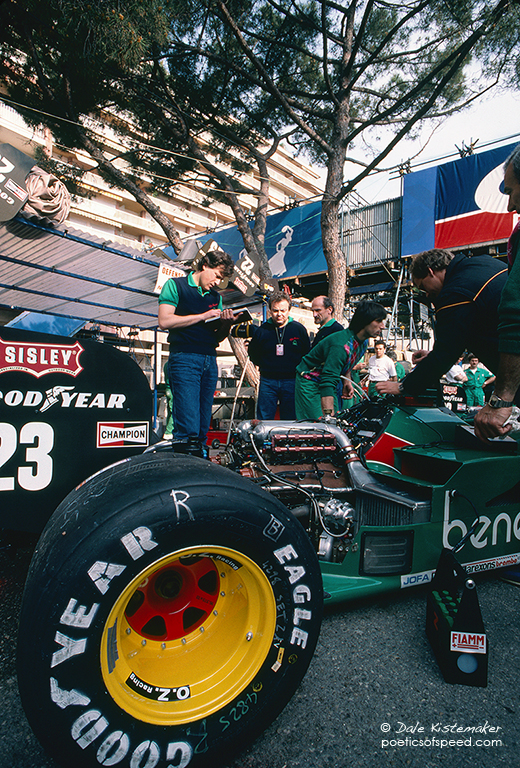
The Benneton pit:
Monaco: Into the Pits
The ritual of race photography begins by obtaining the photo credential. The degree of difficulty varies race to race with the Monaco Grand Prix being toughest of all. Until I actually arrived in Monte Carlo I had no idea how small an area it was. Days before the race the city was filling up with people and the congestion had only begun. I had heard that there were over four thousand applications for media credentials and I knew only a small percentage would be granted. Before Monaco I stopped in Paris to get a FISA card. The Fédération Internationale du Sport Automobile was the organizing body of motorsport and with a letter from Road & Track and some other references they issued me an ID card. But the Automobile Club of Monaco has been running the race since 1925 and they have a nearly impossible situation granting credentials on their hands. In their press center I presented my letter, my FISA card and my ID from the American Society of Magazine Photographers none of which seemed to impress the media official. Panic was rising in me when Bernard Cahier walked over. Bernard was an extraordinarily influential F1 journalist/photographer who was President and founding member of the International Racing Press Association. Bernard asked the official what the problem was and after listening calmly repeated that I was an American photographing for Road & Track and had come a long way. Then he simply stood there, not moving and silently stared directly into the eyes of the press officer who began to fidget, look through all my documents again, shrug and finally issue my credential. Afterwards I caught up to Bernard to thank him and he smiled and said “It was nothing.” I was now on the huge list of people in racing that Bernard Cahier had generously helped and I was deeply grateful.
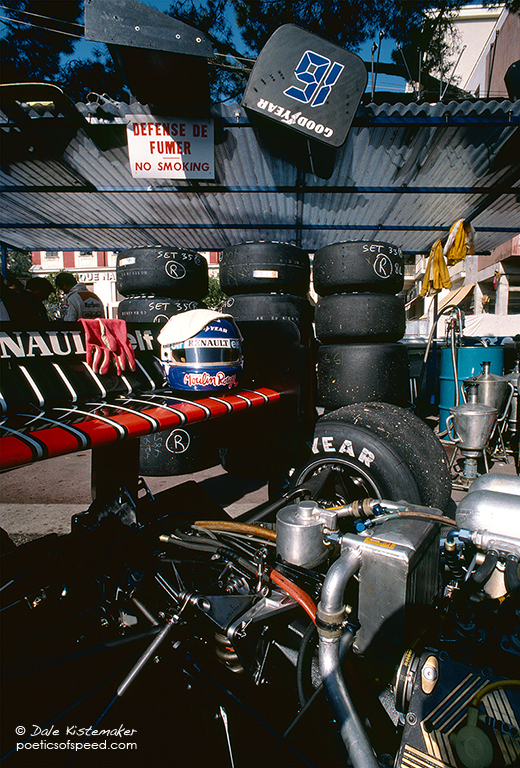
The next day I walked down the streets towards the racetrack. I followed the fencing until I came to an entrance that said authorized persons only and I walked through showing my hard won credential. Suddenly I was in the pits and surrounded by what seemed like chaos. The pits in Monaco were the most crowded and cramped I’d ever seen and I was having a hard time believing I was actually there.
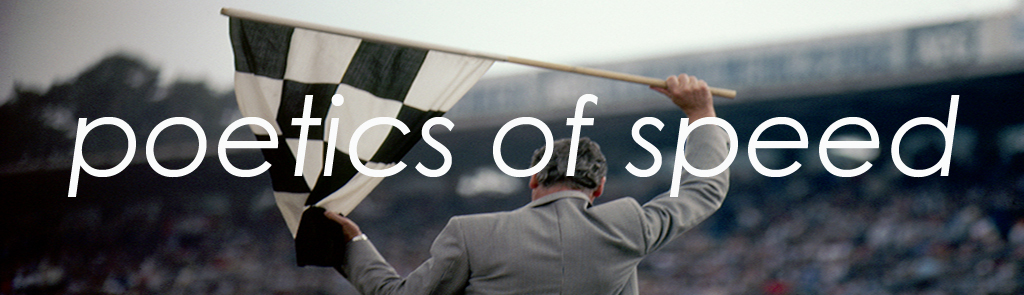
 poeticsofspeed
You must be logged in to post a comment.