
Press Box With Unused Typewriter And Blank Paper – 1985 Belgian Grand Prix, cancelled because the new track surface could not survive the powerful F1 Turbo Cars.
 I’m taking a time out for awhile. I sincerely appreciate your interest and continued support. Stay tuned.
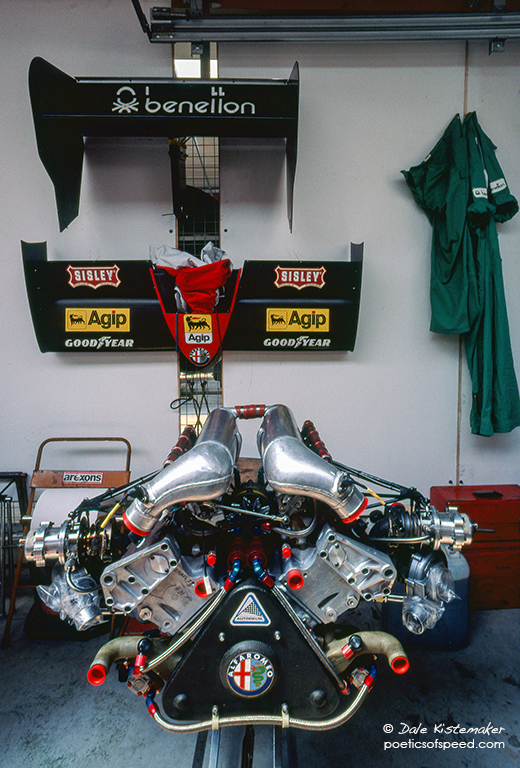
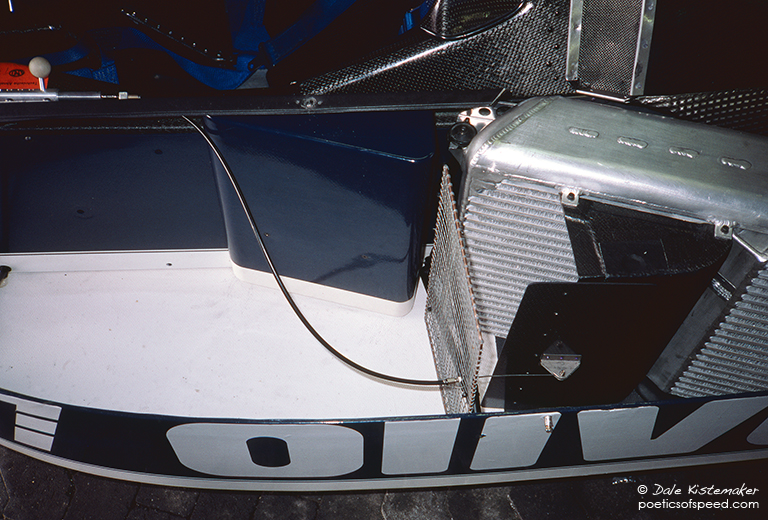
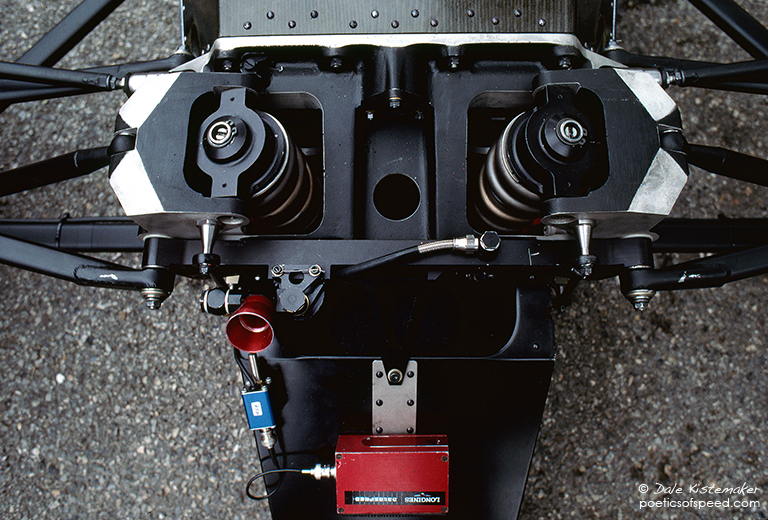
Front End Details – Brabham BT53 – Dallas Grand Prix 1984
 The Formula One race cars I photographed generally had unusually high quality construction. But some exhibited an excellence of design and execution that placed them above the rest. My personal favorites were Gordon Murray’s Brabhams. Every component of his cars revealed clear evidence of his ingenious imagination with thought and attention to detail applied to precise, elegant, reductionist fabrication. They were thrilling examples of the Art of the Machine.

The New Haynes Porsche 956 & 962 Owners’ Workshop Manual

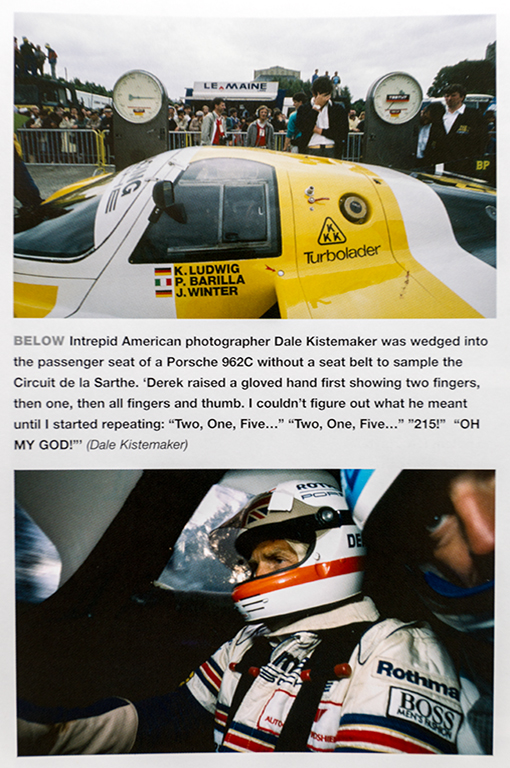
 My copy of the new Haynes Owner’s Workshop Manual for the Porsche 956 & 962 by Nick Garton just arrived. Like many car people I’ve known the Haynes Manuals for decades but this one is special for me because I have several of my photographs included.
At the 1985 24 Hours of Le Mans I was a passenger for one lap of the Sarthe circuit in a Porsche 956 driven with World Champion Derek Bell. As a motorsports and Porsche enthusiast it was an incredible experience. More details are listed under the category 215MPH here at Poetics of Speed.com.
Sincere thanks to author Nick Garton and Steve Rendle, Senior Commissioning Editor at Haynes Publishing for this wonderful opportunity.
In addition to the cover of the book my photographs below show the winning Joest Porsche 956B in a stressful moment during the Vérification process; a calm Derek Bell concentrating while my helmeted head intrudes in the upper left of the picture and a two page spread of Bell’s gloved hands at the wheel at 215MPH while my denim covered knee is wedged below. Profound thanks for the ride of my life Derek!
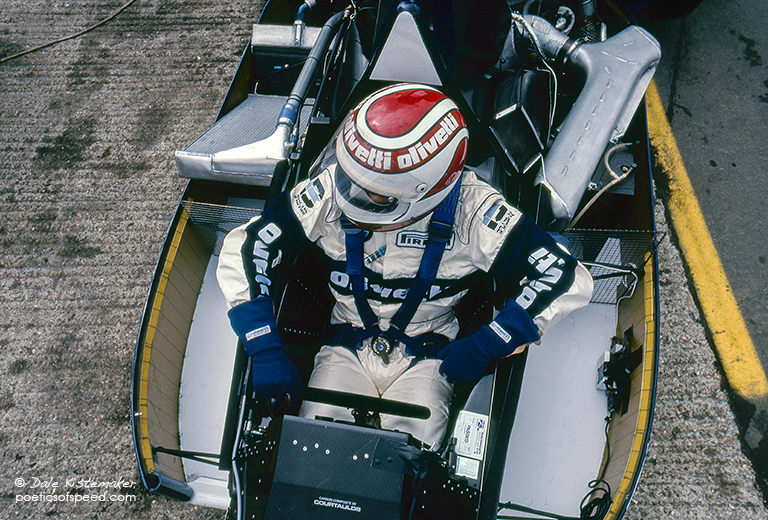
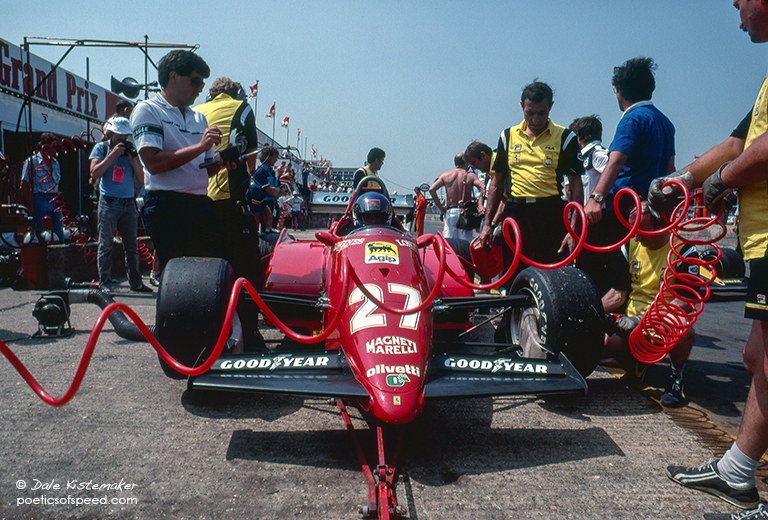
Brabham Pits – German Grand Prix 1985
 Nelson Piquet sits in the Brabham BT-54 while Gordon Murray, on left with headset and clipboard, writes data and Paul Rosche leans into the cockpit for a closer look. The Michelin tire engineer assigned to the Brabham team is on the right with a red notebook.
 poeticsofspeed
You must be logged in to post a comment.